
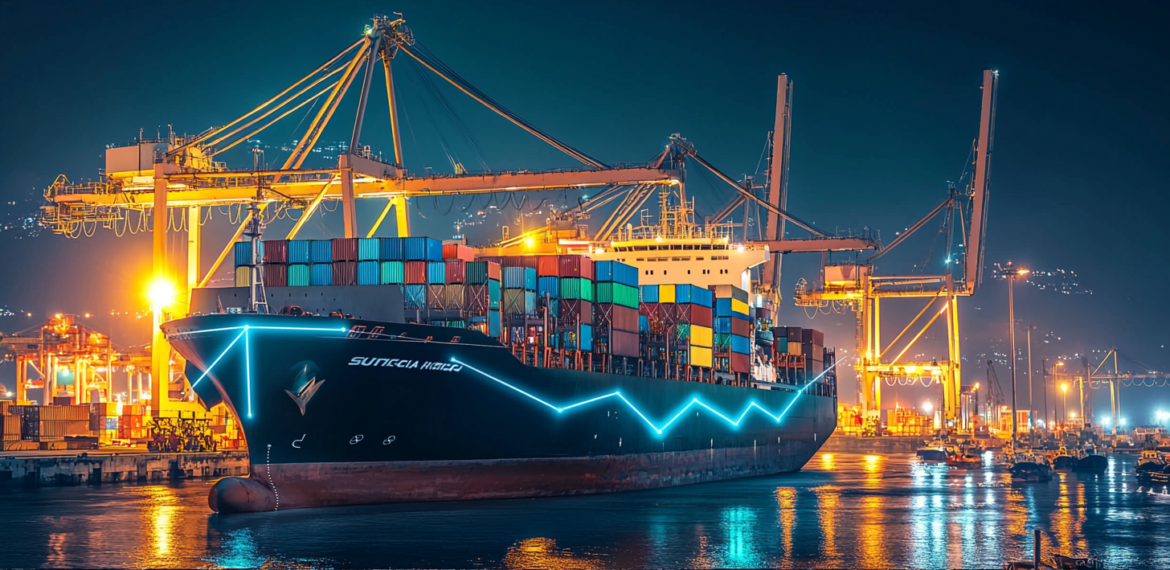
If your latest sea freight quote from China looked a lot higher than the one before, you’re not alone. MSC (Mediterranean Shipping Company) — the world’s largest container shipping line and one of the main carriers on the China to South Africa route — has raised its published freight rates from Asia to South Africa several times in 2026. This guide explains what has changed, by how much, why it’s happening, and what importers can do to keep their shipping costs under control.
Last updated: November 2026. Shipping lines change their rates every few weeks, so treat the figures below as a snapshot of published rates, not a quote.
MSC publishes regular “Price Announcements” for its trade from the Far East (including China, Japan, Korea and Southeast Asia) to Sub-Saharan Africa and the Indian Ocean. Each announcement sets new FAK (Freight All Kinds) rates — the base price per container for general cargo — for a specific window, often just two weeks long.
Through 2026, those announcements have moved sharply upwards for South Africa. The most recent one available at the time of writing, published in October 2026, set the rate to South Africa at US$5,900 per 20ft container and US$6,900 per 40ft container, valid from 15 to 31 October 2026.
Published MSC FAK rates from the Far East to South Africa, in US dollars per container:
| Validity period | 20ft container | 40ft / 40ft high-cube |
|---|---|---|
| 1–15 November 2025 | US$3,200 | US$4,100 |
| 1–15 March 2026 | US$2,800 | US$3,800 |
| 1–14 September 2026 | US$4,800 | US$5,800 |
| 15–31 October 2026 | US$5,900 | US$6,900 |
That means:
Important: these are published base rates. MSC states that its FAK rates are subject to all surcharges and local charges at both ends, so the total cost of moving a container is higher than the figures above. Actual contract rates negotiated by forwarders and large shippers can also differ.
MSC says the new rates are intended to support “the continued provision of reliable and efficient services across its network”. It doesn’t publish a detailed breakdown, but several pressures on this route are well documented:
The Port of Durban — where most containers from China arrive — has been badly congested since August 2026. Ships waiting days at anchor can’t be used for other voyages, which reduces the effective capacity on the route and raises costs for carriers. Read our full guide to Durban port congestion for the details.
MSC isn’t the only line passing on costs. Maersk introduced a Congestion Fee Destination for cargo from the Far East and Middle East to Durban from 15 September 2026 at US$250 per 20ft and US$500 per 40ft container — and raised it to US$450 per 20ft and US$900 per 40ft from 1 November 2026.
Demand on the Asia to South Africa route rises ahead of Black Friday, Christmas and the new year as importers rush to bring in stock. Higher demand for limited space pushes prices up.
Ocean freight is priced in US dollars. For South African importers, any weakening of the rand against the dollar makes the same freight rate more expensive in rand terms.
You’ll feel carrier increases most directly, because you’re paying for the whole container. A rise of a few thousand dollars per box can wipe out the margin on lower-value goods.
With LCL sea freight, you share a container with other importers and pay per cubic metre (CBM) for the space you use. You’re not paying for a whole box, but when container costs rise, forwarders’ costs rise too — so per-CBM prices across the market can follow over time.
Freight is part of your total landed cost, together with duties, VAT, clearance and delivery. When freight goes up, so does the true cost of every unit you sell. If you haven’t already, it’s worth recalculating your margins. Our guide to what makes up your shipping cost from China explains every component.
Don’t commit to a supplier order based on last month’s shipping price. Get a current freight quote first, so you know your real landed cost before you pay.
Carrier rates can change every two weeks. Ask exactly how long your quote holds and book within that window.
Several small shipments cost more than one consolidated shipment. If you buy from multiple suppliers, have the goods collected at one warehouse in China and shipped together.
For light or high-value goods, air freight can be more competitive than many people expect — especially when sea rates are high and Durban is congested. Run both options through our shipping calculator.
For sea freight you pay for volume. Ask your supplier for accurate carton dimensions, avoid oversized packaging, and make sure cartons are packed to use space well.
Ordering early — before the year-end rush — usually means more space, fewer delays and less exposure to peak-season price spikes.
If you sell on to customers or retailers, leave some room in your prices for freight changes rather than quoting on the assumption that today’s rate will last.
Nobody can say for certain. Freight rates rise and fall with demand, capacity, port conditions and fuel costs, and they can move quickly in either direction — as the drop from late 2025 to early 2026 showed. Two things are worth watching:
Until then, the safest assumption is that rates can change at short notice, and to plan your orders and pricing with that in mind.
MSC’s published FAK rate from the Far East to South Africa rose from US$2,800 per 20ft and US$3,800 per 40ft container in early March 2026 to US$5,900 per 20ft and US$6,900 per 40ft for 15–31 October 2026. Surcharges and local charges are extra.
FAK stands for “Freight All Kinds”. It’s a single base rate per container that applies to general cargo regardless of the type of goods, before surcharges and local charges are added.
MSC says the increases support reliable services across its network. The rises coincide with severe congestion at the Port of Durban, congestion surcharges across the industry, and year-end peak demand.
LCL importers pay per cubic metre rather than for a whole container, so they don’t pay carrier container rates directly. However, when container costs rise, forwarders’ costs rise too, which can push per-CBM prices up across the market over time.
Yes, some carriers charge one. Maersk, for example, charges a Congestion Fee Destination on cargo from the Far East and Middle East to Durban — US$450 per 20ft and US$900 per 40ft container from 1 November 2026.
Get a quote before paying your supplier, book within your quote’s validity, consolidate orders from different suppliers, pack efficiently, compare sea and air for small shipments, and order ahead of peak season.
Freight rates are moving fast, so a quote from last month may already be out of date. Before you pay your next supplier, get a free quote and we’ll give you a clear, all-in price for shipping your goods from China to South Africa.
Sources: MSC customer advisories “Price Announcement – Trade from Far East to Sub-Saharan Africa and Indian Ocean” (October 2026, August 2026); Container News (March 2026 rates); MSC advisory of October 2025 (November 2025 rates); Container News on the Maersk Durban congestion fee.