
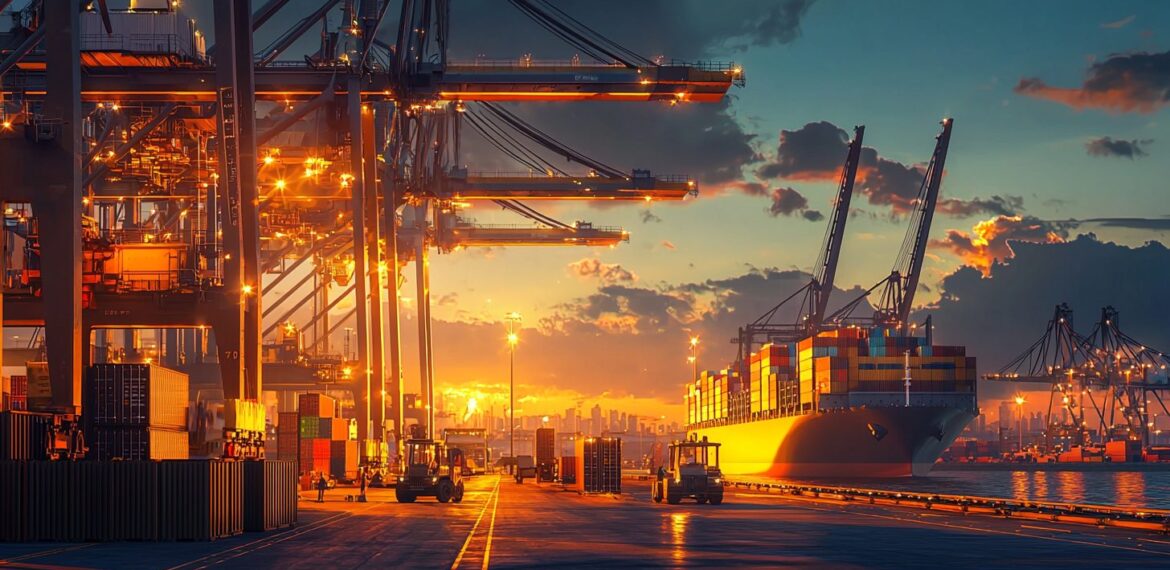
Durban port congestion has become one of the biggest problems facing South African importers in 2026. If your container from China is taking longer than expected to arrive, the Port of Durban is very likely part of the reason. This guide explains what is happening at the port, why the delays started, how long they are lasting, who is being affected, and — most importantly — what you can do to protect your stock, your customers and your cash flow while the situation continues.
Last updated: November 2026. Port conditions change week to week, so treat the figures below as a snapshot, not a guarantee.
The Port of Durban is South Africa’s busiest container port and the main entry point for sea freight coming from China. Most of its container traffic runs through one terminal: the Durban Gateway Terminal (DGT), previously known as Durban Container Terminal Pier 2.
On 1 January 2026, DGT moved into a new 25-year partnership between Transnet and International Container Terminal Services Inc (ICTSI), a Philippines-based port operator. Transnet keeps majority ownership, while ICTSI runs the terminal. The goal of the deal was to modernise the terminal and lift productivity — when the contract was signed, the target was to raise crane moves from around 18 to 28 per hour.
Instead, the second half of 2026 has brought some of the worst delays the terminal has seen in years. Vessels have been queuing outside the port waiting for a berth, containers have been slow to leave the yard, and the knock-on effects have spread to other South African ports.
| When | What happened |
|---|---|
| 1 January 2026 | ICTSI takes over operations at Durban Gateway Terminal under a 25-year concession, with Transnet as majority owner. |
| July 2026 | Congestion builds, with dozens of vessels reported at anchor off Durban across all cargo types. |
| 15 August 2026 | DGT switches to a new terminal operating system (Navis N4). Operations are disrupted during the migration and a backlog forms. |
| Late August 2026 | The South African Association of Freight Forwarders declares a crisis and escalates the issue to government. Some carriers warn customers to expect delays of up to 20 days. |
| October 2026 | Transport Minister Barbara Creecy visits the port. Exporters report that ships bypassing Durban are causing knock-on delays at Cape Town. |
| November 2026 | Industry bodies describe DGT as “stabilised but not recovered”. Reports of 40+ vessels at anchor on some mornings and waiting times of around 12 days. |
There is no single cause. Durban port congestion is the result of several problems hitting at the same time:
The switch to a new IT system in August 2026 is widely seen as the trigger for the current crisis. Changing the software that controls where every container goes, which truck collects it and which crane loads it is a major operation, and the transition caused serious disruption.
Industry commentators argue the system change exposed weaknesses that were already there: equipment breakdowns, poor availability of straddle carriers (the machines that move containers around the yard) and a long-standing lack of refurbishment. New equipment has to be manufactured, shipped to Durban and installed — which takes time.
Even when a ship is unloaded, the container still has to leave the port. Most cargo leaves Durban by truck rather than rail, and trucks share busy roads with commuter traffic. When the landside slows down, the yard fills up and the whole operation slows further.
Durban always sees a spike in volume towards the end of the year, driven by Black Friday, Christmas stock and businesses closing out their year. That extra volume is landing on a terminal that was already struggling.
Reports also point to shortages of tugs, staffing pressures and confusion over who is responsible for what between the private operator and Transnet — all of which make it harder to move ships in and out quickly.
Delays vary week to week, but the figures reported by South African business media and industry bodies in late 2026 give a clear picture:
In practical terms, a sea freight shipment from China that would normally take 30–45 working days door to door can take noticeably longer while these conditions last — and the extra time is hard to predict in advance.
The delay itself is only part of the problem. Port congestion can also bring:
Most sea freight from China to South Africa arrives through Durban, so these delays can affect you even when everything goes perfectly at the China end. Here’s how to protect your business:
Add extra lead time to every order placed with your Chinese suppliers, especially for stock you need before December or in the first weeks of the new year.
Plan stock levels and customer delivery dates around a longer window than usual. Promising customers a tight date right now is a risk.
Air freight from China avoids the port queue entirely, typically arriving in 7–14 working days. It costs more per kg, but for smaller, lighter or time-critical shipments it can be far cheaper than a lost sale or a stopped production line.
Send the urgent portion by air to keep you trading, and the bulk by sea to keep costs down.
Port delays are bad enough without a customs hold-up on top. Make sure your commercial invoice, packing list and any required permits are accurate and consistent before your cargo ships.
Stay in close contact with your forwarder and use shipment tracking so you know early if your timeline is slipping and can update your customers.
Not after the goods have shipped. A good forwarder can help you choose between sea and air, time your shipment around current conditions and estimate your costs up front. You can also get a quick estimate with our shipping calculator.
| Sea freight | Air freight | |
|---|---|---|
| Normal transit time | 30–45 working days | 7–14 working days |
| Affected by Durban port congestion? | Yes — can add significant extra time | No — avoids the port queue |
| Cost | Lower, charged per CBM | Higher, charged per kg |
| Best for | Large, heavy or bulky shipments that aren’t urgent | Urgent, light, high-value or time-sensitive goods |
There is no confirmed date. The terminal operator says it is working directly with affected customers and fixing equipment and system issues, and government has been involved at ministerial level. However:
Until conditions clearly improve, the safest approach is to plan for delays rather than hope to avoid them.
The main trigger was a new terminal operating system introduced at Durban Gateway Terminal in August 2026, combined with ageing equipment, poor straddle-carrier availability, yard and truck congestion, and year-end peak volumes.
In November 2026, ships were reported waiting around 12 days at anchor before being worked, and freight forwarders estimated conditions were adding about 20 days to affected supply chains. Delays change week to week.
Yes. Most sea freight from China to South Africa enters through Durban, so container shipments from China can be delayed even when they leave China on time.
No. Air freight lands at the airport rather than the seaport, so it avoids the port queue. Air freight from China to South Africa typically takes 7–14 working days.
There is no confirmed date. New equipment is reportedly expected around mid-2027, and some industry experts expect the port to be running well within about 18 months.
Order earlier, build extra buffer time into your plans, use air freight for urgent goods, split shipments where it makes sense, and make sure your documents are correct before your goods leave China.
Durban port congestion is outside anyone’s control, but how you plan around it isn’t. If you’re importing from China and want help choosing between sea and air freight, timing your order or getting your paperwork right before your goods leave, get a free quote and we’ll help you plan a shipment that fits your deadline. Shipping into KwaZulu-Natal? See our page on shipping from China to Durban.
Sources: reporting by Daily Maverick (November 2026), BusinessTech (October 2026) and Freight News, plus statements from South African freight and shipping industry associations.